 locknlockf2c.com – News Highlights & Timely Briefings
 locknlockf2c.com – News Highlights & Timely Briefings
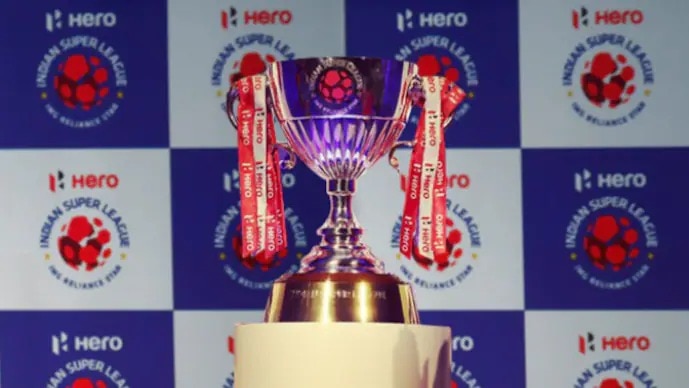

For years, Indian football fans have had to follow as much courtroom drama as on-field action. Administrators, constitutions, and FIFA warnings often grabbed more headlines than goals or trophies. That phase of limbo might finally be over.
On September 19, the Supreme Court approved the All India Football Federation’s (AIFF) new constitution, giving the sport in India a long-awaited sense of direction. The judgment doesn’t just settle legal wrangles; it sets the framework for how football will be governed, who will have a voice, and how leagues will be structured.
From promotion and relegation in the Indian Super League (ISL) to player and women’s representation in decision-making, the changes are wide-ranging. For once, the conversation isn’t about politics or delays, it’s about football, competition, and how India wants to build its future in the game.
At the heart of the constitution lies a promise I-League clubs have demanded for years—promotion and relegation. For a decade, the Indian Super League (ISL) operated as a closed, franchise-style competition, where entry depended on money rather than merit. That model is now set to change.
The new rules make it clear: India’s top-tier league must follow open-league principles. Clubs that earn their place on the pitch will rise, and those that fail will drop. The Supreme Court went as far as calling promotion – relegation “essential for healthy competition.”
For I-League clubs, this is vindication. Ten of them had written to the Court demanding entry into the top division, and their voices have finally been heard.
The next big shift is control.
Perhaps equally significant is the check placed on private operators. For years, Football Sports Development Limited (FSDL)—the Reliance-backed entity that runs ISL—enjoyed sweeping control. The new constitution redraws those lines: private partners may manage competitions and commercial rights, but ownership and governance must remain with the AIFF.
To make things simpler, The AIFF will remain the owner and custodian of the top-tier league. FSDL can still be the organiser, marketer, and commercial driver—but the bigger voice rests with the federation.
This signals the beginning of a slow transition away from a privately held, closed league to a system where the federation has the final say, echoing global football structures.
One of the most refreshing changes is who gets to sit in the room where decisions are made.
For decades, players had little say in Indian football, watching as administrators ran the show. The new AIFF Constitution changes all that.
The federation’s top decision-making body, the General Body, will now include players, referees, coaches, and club representatives, giving them a real voice in how the game is run. The lineup looks like this:
To qualify as an eminent player, officials set a benchmark based on international experience. Initially, it was seven men’s matches and three women’s matches, but the court adjusted it to five for men and two for women, reflecting India’s smaller pool of internationals. Domestic games don’t count—only real international exposure. The idea is simple: bring people with actual on-field experience into the room where decisions are made.
For years, the game has been hampered by murky politics and unclear rules on who holds power. Now, with clear guidelines on tenure, accountability, and governance, this change comes as a welcome blessing, letting football finally take centre stage.
On a practical level, the Supreme Court ruling clears the path for AIFF to move stalled plans forward. Contracts with FSDL can now be renegotiated once the current deal ends in December, and domestic tournaments like the Super Cup and ISL can proceed without any legal uncertainty. The national team also gains the stability it needs ahead of upcoming international fixtures.
But the real impact goes beyond paperwork. This decision sets Indian football on a path closer to global standards: merit-based competition, greater player and stakeholder participation in governance, and less reliance on private monopolies. In short, it’s a step toward a fairer, more professional game at every level.
The reforms aren’t just limited to the AIFF headquarters in Delhi. State associations will now also have to follow strict guidelines under the new constitution.
At least half of all districts in a state must be officially affiliated, financial accounts need to be fully transparent, and players must have a voice in decision-making.
In other words, the changes are designed to reach all levels of Indian football, from the top leagues down to grassroots clubs. Whether it’s in Manipur, Kerala, or Goa, local football bodies will have to raise their standards, adopt better governance practices, and ensure accountability.
It’s worth remembering that Indian football has seen reforms promised before, only to fizzle out. This time, though, the Court has kept the ultimate check: no amendment to the constitution can be made without its approval. That’s a safety net to prevent backdoor rollbacks.
For fans, that means a league system that feels more authentic, more competitive, and maybe, just maybe, one step closer to the dream of Indian football punching above its weight on the global stage
Newer articles
Older articles

 Italy Secures Back-to-Back Billie Jean King Cup Titles, Defeating USA in Finals
 Saif Hassan Backs Bangladesh to Reach Asia Cup Final After Victory Over Sri Lanka
 US Open 2025: Specialists Sara Errani, Andrea Vavassori win 'reimagined' mixed doubles title
 Asia Cup promo sparks debate for India vs Pakistan focus amid tensions
 Asia Cup Face-Off: Shastri Queries Pakistan Captain on Team Morale Amid Handshake Snub Controversy
 Mithun Manhas Enters Race for BCCI Presidency, Files Nomination
 Lyles Anchors US to 4x100 Relay Gold; Botswana Stuns in 4x400 at World Athletics Championships
 Pandya Strikes Again! Key Fakhar Zaman Wicket Extends Dominance in India-Pakistan Clashes
 West Indies Gear Up for India Test Series with Pre-Tour Camp in Ahmedabad
 Sahibzada Farhan's AK-47 Celebration Sparks Controversy During India-Pakistan Asia Cup Match